
“It felt like a bomb dropped,” my daughter Emily recalled over lunch as she shared the circumstances and moments of terror that she and her husband, Josh, felt—the time they were given a pregnancy diagnosis of a potentially serious brain abnormality, which included being presented with the option to have an abortion.
I remember that day too, and it’s one of a myriad of reasons the care and protection of unborn life is such a personal issue to me. 
 The Brain Abnormality Diagnosis
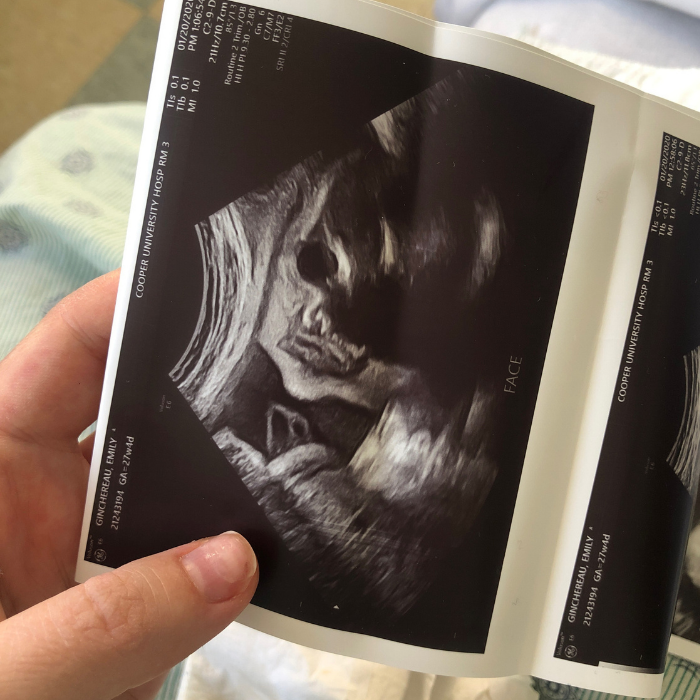
At the 20-week ultrasound of Emily and Josh’s firstborn, a brain abnormality was discovered. Their doctor called it an absent septum pellucidum, a crossover in the brain where there shouldn’t be one. He went on to explain that this abnormality could have serious effects on his development, neurological status, and vision. Because of what they were potentially facing, they needed to schedule a fetal MRI to get a better image of his brain.
Thoughts raced through Emily’s mind. “Was this essential? Would our insurance cover it? Would it really give us more information about what he would be like or what we could be facing?”
She told me, “It was our first child, and, at that point, there was no way anyone could know what the impact of his ‘abnormality’ would be. I tried to reach Josh but couldn’t, so I called you. I was just so scared.”
When I got that phone call, I did my best to comfort her, reminding her that whatever she and Josh were facing, we were all in this together. I knew that for months she had been so scared that she was going to miscarry. Honestly, she was in a pretty rough state, given this fresh news as well as her previous miscarriages that had been attributed to a uterine anomaly. Thankfully, she was not facing the possibility of miscarriage this time, but now it was something else! My heart was heavy for her.
In the days that followed, Emily and Josh wrestled with questions like, Would he be a preemie? If so, how early? Was he going to be ok? Would he be blind or seriously impaired in some other way? There were so many unknowns, but the biggest was what to expect.
The Option to Abort
At 22 weeks, Emily had her follow-up with maternal-fetal medicine (MFM) to see the specialist who had been tracking all her pregnancies since before her first miscarriage. During that first pregnancy, they had identified a “uterine abnormality.” Now with this pregnancy, even before they found the brain abnormality, at around 16 weeks her cervix had begun shortening. Once MFM discovered that, they did an ultrasound to establish a baseline and then brought her back in to check it every four weeks.
Although Josh had been with Emily at most of her appointments, it was her mom—my wife, Pam—who was with her at the appointment where the MFM responded to the brain abnormality by presenting her with the option to abort. Abortion is fully legal and protected in New Jersey, where we live. New Jersey doesn’t restrict abortion based on gestational age, doesn’t require parental involvement for minors, and protects out-of-state patients from legal action and extradition.
Emily recounted, “I think our doctor felt like it was his obligation. As a medical professional myself, I could tell he was just doing his job, but I think he knew it wasn’t an option [we were open to], and I made it clear that it wasn’t.” Pam remembered the same thing—that the doctor presented the option of abortion with sensitivity and that “when Emily said ‘that’s not an option for us,’ she didn’t flinch and the doctor understood.”
There was still a decision Emily and Josh needed to make, though, about whether or not to have a fetal MRI, which would hopefully give better detail about the severity of the abnormality.
As we finished up our Chick-fil-A, Emily recounted, “I always like to go with what my medical provider recommends, but I thought, ‘What difference will this make in the outcome or our son’s health?’ I was told it could provide a better idea of his needs at birth and thus give insight into where he should be delivered. Ironically, in the end, we went through with all the hoopla of having the fetal MRI done, and then, a week later, our son decided to make his grand entrance!”
Theodore John’s Grand Entrance!
As we continued our conversation and got to the climax of the story, Emily wanted to make it clear that she and Josh had had a great relationship with the doctor who had presented her with the abortion option: “He was the same doctor who told us our first baby had no heartbeat. He visited us soon after Theo was born and joyfully asked what we had named our son. I responded, ‘His name is Theodore John. Theodore means, ‘gift from God.’”
“That he is,” their doctor responded.
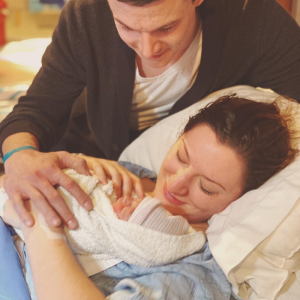
Theo had an ultrasound of his brain after he was born, and then another MRI at 6 months. He was followed closely for development and vision impairments. No news came from any of the imaging, and the neurologist chalked it up to a “normal anomaly.” This gave us some reassurance, but we would still just have to wait and see.
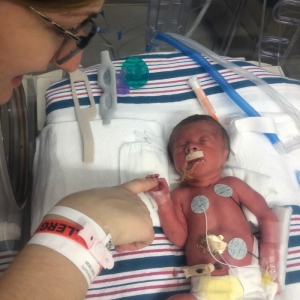
A Healthy Child Against Many Odds
Theo is now six. He just finished kindergarten. He loves numbers and math, especially multiplication. He loves talking about electricity and electronics. He loves to sing and build things. He’s an intense little boy, and very deep and caring. His teachers adore him. Fascinated by how things work, he loves taking things apart and fixing them. As he was learning to talk, he would often cry out, “It wewks!”
His eyesight has been 20/20, and he’s been on track developmentally, although his speech was a little delayed early on, which could be related to being a preemie.
Emily and Josh’s son—Pam’s and my grandson—truly was and is healthy against many odds.
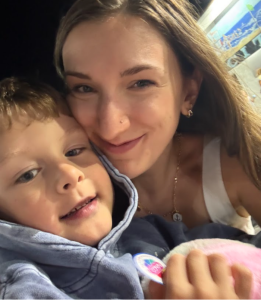
As we continued talking about how far Theo had come, my daughter pulled out a journal where she had captured some of her third-trimester memories. As I combed through her various entries, three stood out especially:
“Every week is totally different with aches, pains, heartburn, and other things associated with getting ‘bigger.’”
“Worry is a choice and doesn’t make my baby any healthier or fuse brain ventricles back together.”
“What I liked about my upbringing was that I always felt safe and loved.”
As we finished our lunch, Emily paused to gather her thoughts and summed up the settled place she had come to regarding her Theo: “This child is and always will be in God’s hands, the best place he could possibly be.”
I share all this to remind each one of us that, as Roland Warren, President of Care Net, often says, “Life decisions require life support.”
Abortion doesn’t happen in a vacuum. It happens most often when women feel alone, terrified, and unsupported. Indeed, 60% of women who chose abortion reported that they would have preferred to give birth if they had more emotional or financial support.
From an early age, my daughter felt “safe and loved.” Her husband, Josh, made her feel that way too. And her faith reminded her that God would never abandon her or her son.
“Looking back, it was a time clouded by anxiety and chasing our tails. Thank God the outcome was much better than anything I could have hoped or imagined. I felt held by God in that time, and the support I had and have always had made abortion not even a thought in my head, even if we were facing the worst-case scenario of having a son with severe disabilities.”

Greg Austen is President of Equal Rights Institute, a former church planter with the Evangelical Presbyterian Church (EPC), and the author of several books, including How I Became a Christian Despite the Church, Christian Nationalism: A Constructive Conversation, and Irreplaceable: Recovering God’s Heart for Dads.
A mission-driven executive leader with more than 35 years of experience, Greg is passionate about listening conversations, training, and empowering fresh generations, and a compassionate and intellectually rigorous pro-life movement that is reconnected to character, civility, and the beauty of a holistic understanding of life rooted in the Imago Dei.